Enterprise Storage Case Study: Recovering 300+ TB Server Data for Intas Pharmaceuticals After Failed RAID Rebuild
November 18, 2026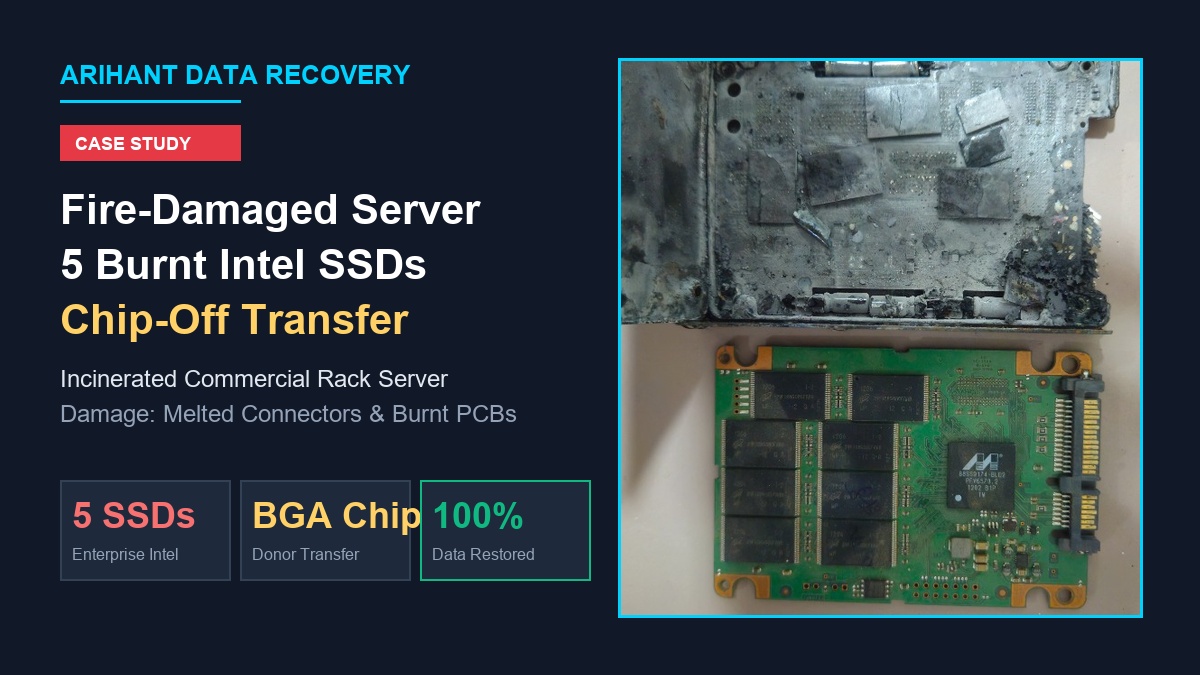
100% RECOVERY CONFIRMED
Data disasters come in many forms—accidental formatting, electrical surges, or mechanical drive failures. However, few scenarios are as catastrophic for a business as a severe structural fire. When an enterprise facility catches fire, the server room often bears the brunt of devastating temperatures, smoke contamination, and chemical extinguishing agents.
Recently, the engineering laboratory at Arihant Data Recovery took on one of the most physically extreme disaster recovery cases in our history: an enterprise rackmount server that had been pulled from the ruins of a major commercial fire.
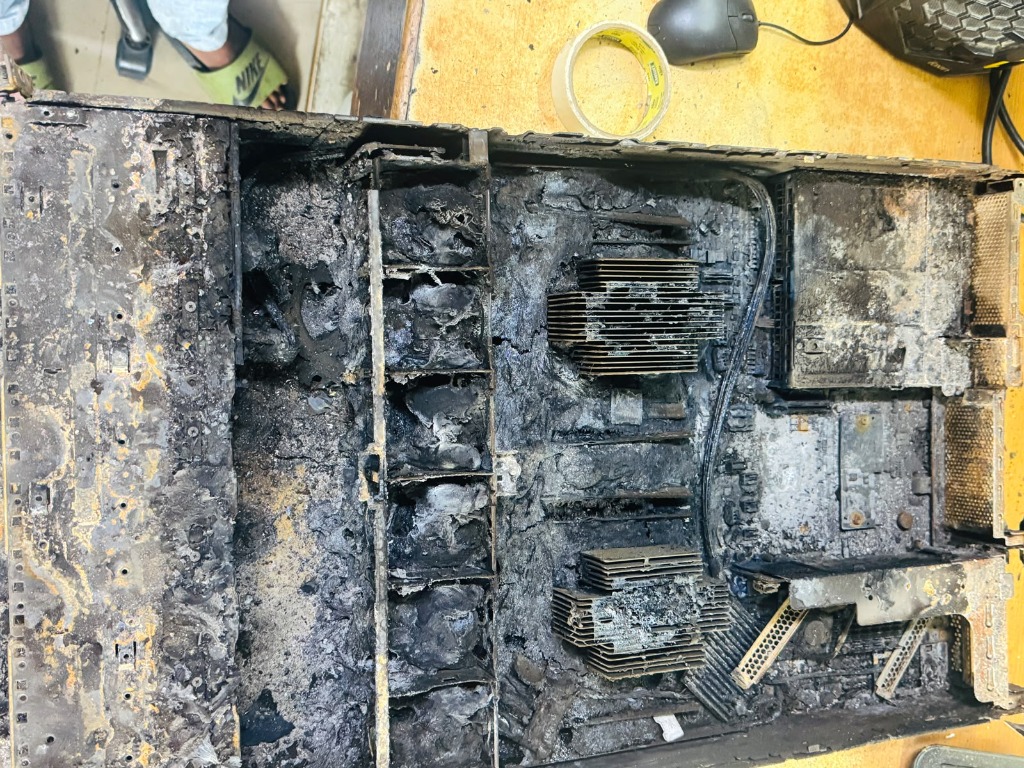
The server was incinerated. Inside the scorched steel chassis, the motherboards, CPU cooling arrays, and power lines were completely melted into carbon slag. Housed inside the front storage bays was the company’s vital core data repository: 5 enterprise-grade Intel Solid-State Drives (SSDs) holding critical financial ledgers, ERP databases, and customer records.
Why Fire-Damaged Solid-State Drives Present Unique Recovery Challenges
When storage media undergoes severe fire exposure, it suffers three concurrent destruction vectors:
- Extreme Thermal Shock: Temperatures exceeding several hundred degrees Celsius rapidly melt plastic SATA/SAS connectors, scorch PCB fiberglass, and rupture passive SMD capacitors and power inductors. For general guidance on physical trauma, read our analysis on SSD recovery after physical damage.
- Conductive Carbon Soot & Acidic Residue: Burning synthetic materials emit thick carbon soot that coats every electronic trace. Soot is electrically conductive; if an inexperienced technician attempts to power on such media, catastrophic short circuits destroy the internal memory chips instantly.
- Controller vs. Silicon Survival: While exterior aluminum casings burn and connectors liquefy, solid-state NAND flash dies sealed inside BGA epoxy packaging have high thermal tolerance—provided the silicon has not cracked or exceeded its maximum Curie threshold.
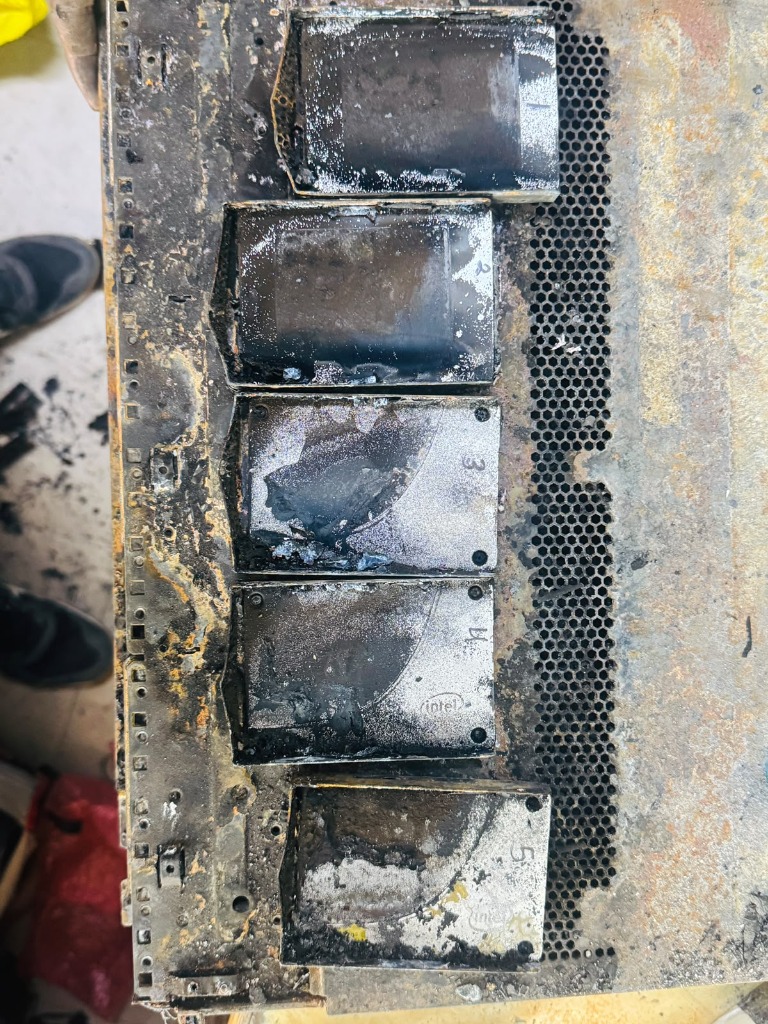
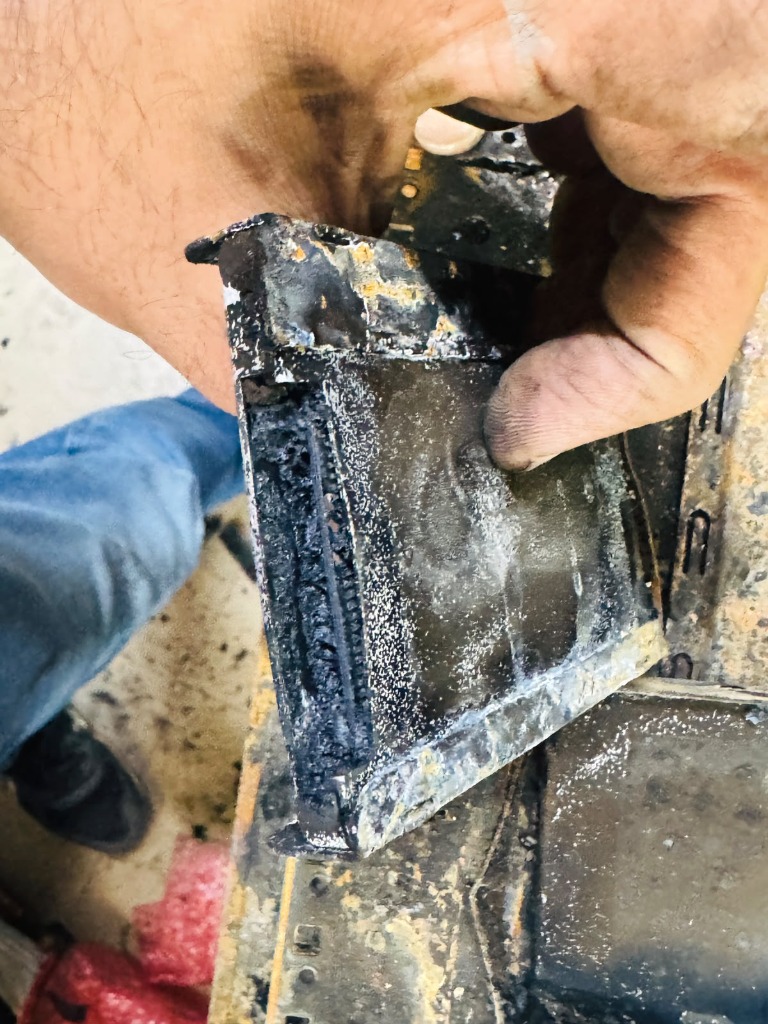
Because the external connectors were completely melted and the on-board power regulation circuitry was fried, standard diagnostic connections were impossible. The only viable path forward was forensic micro-soldering, chip-off desoldering, and donor PCB transplantation.
Forensic Lab Decontamination & Component Triage
Working with fire-damaged media requires strict chemical decontamination procedures before any electrical work begins:
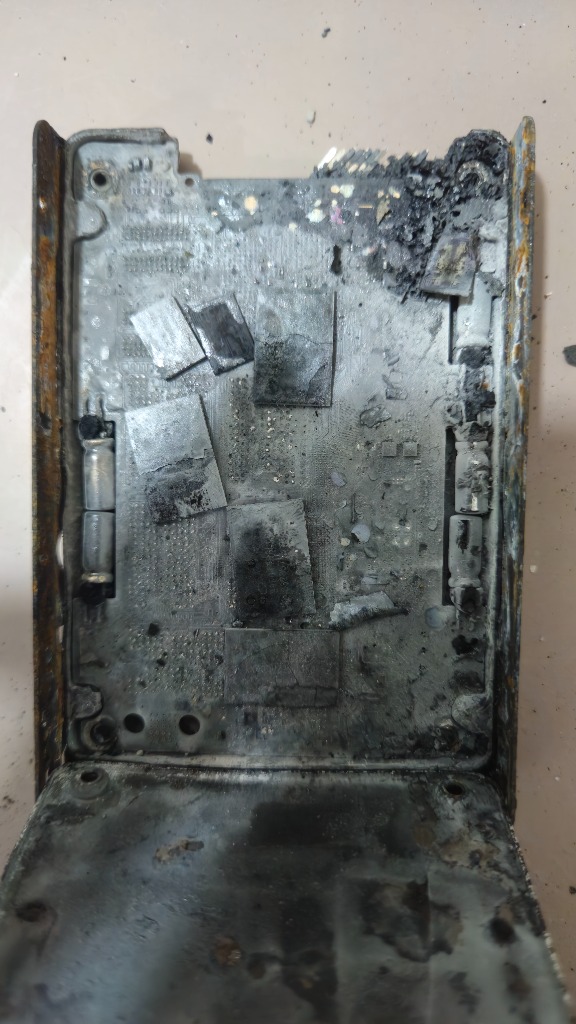
- Chemical Ultrasonic Cleaning: The charred drive casings were opened and disassembled. The scorched circuit boards were treated with specialized non-conductive ultrasonic cleaning solvents to eliminate corrosive soot, ash, and extinguishing residues without stripping chip identifying codes.
- Microscopic Inspection of Silicon Packages: Under high-magnification stereomicroscopes, each individual NAND Flash memory chip and the Marvell/Intel SSD controller were inspected for thermal fractures, pin oxidation, and package warping. Fortunately, the core silicon dies remained structurally intact.
The Recovery Engineering Process: Chip-off & Donor PCB Transplant
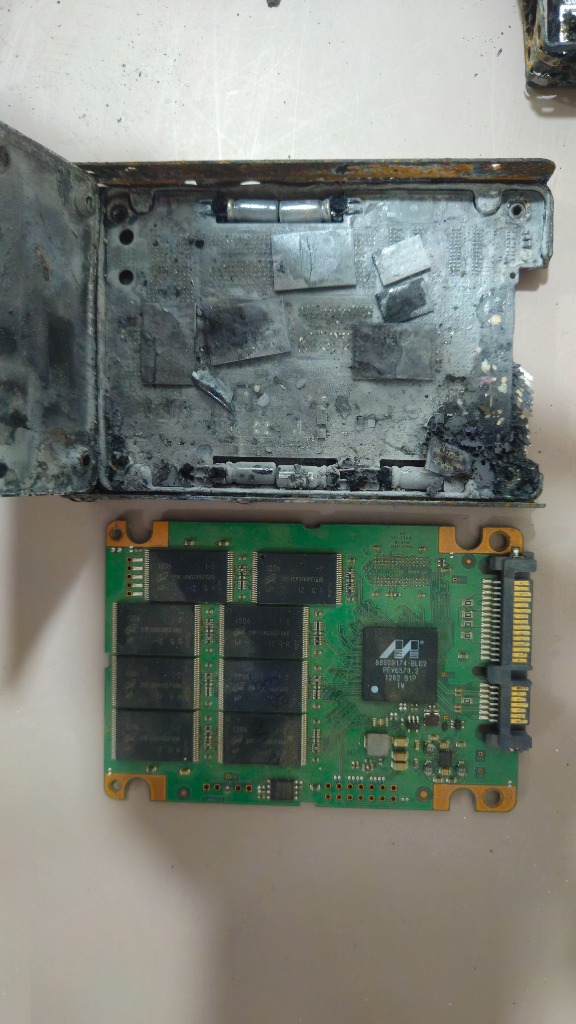
Because enterprise solid-state drives employ proprietary controller-level Wear Leveling algorithms, Flash Translation Layers (FTL), and custom hardware encryption, simple standalone chip-readers cannot reconstruct files without matching controller architecture. Our team executed a precise **donor hardware transplant strategy**:
1. Matching Exact Donor Hardware
We sourced identical donor enterprise SSDs matching the precise board revision, Marvell master controller ASIC, power distribution topology, and flash channel routing.
2. Temperature-Controlled Micro-Desoldering
Using precision infrared rework equipment, our engineers carefully desoldered each multi-gigabyte NAND flash IC from the fire-damaged boards. Strict temperature curves were maintained to avoid any additional thermal stress on the already compromised silicon.
3. High-Precision BGA Reballing
The underside solder contact arrays on each extracted NAND chip were stripped of oxidized solder, cleaned, and reballed with precision stencils using uniform leaded alloy spheres to ensure flawless electrical conductivity.
4. Donor Board Assembly & Firmware Stabilization
The reballed NAND chips were mounted onto the fresh donor PCB in their exact physical channel/bank configuration. Using specialized SSD diagnostic equipment (PC-3000 SSD), we stabilized the drive in factory safe mode, bypassed damaged power circuits, and rebuilt the critical Flash Translation Layer (FTL) tables.
5. Raw Bit-by-Bit Sector Imaging & Virtual Array Reassembly
Once stable communication was established, full raw bit-stream clones were created across the member SSDs. With clean binary images in hand, our engineers reconstructed the server’s virtual RAID layout, validated database headers, and mounted the file system without data loss.
Case Summary & Technical Results
Emergency Protocol: What to Do After Fire & Heat Damage
If your enterprise infrastructure experiences a fire or severe thermal event:
- NEVER attempt to plug in or power on burned drives: Melted traces and shorted capacitors will feed over-voltage directly into surviving NAND flash dies, permanently destroying the data.
- DO NOT clean drives with water or chemical detergents: Ash and soot combined with moisture form highly acidic solutions that corrode delicate microscopic components. Similar risks apply to water-damaged drives.
- Store in dry, anti-static protective packaging: Handle fire-damaged drives with care to avoid dislodging thermally stressed components.
- Seek dedicated chip-off data recovery immediately: Recovering data from burnt SSDs requires specialized micro-soldering rework stations, donor parts inventories, and hardware flash analyzers.